Start with the room the customer actually wants cleaned
Someone asking for a cleaning estimate usually knows what worries them. The oven has been used every night, the previous tenant left marks on the floor, or the office needs to be ready before staff arrive on Monday. They may have no idea whether to choose regular, deep or end of tenancy cleaning. A useful website helps them describe the property and the result they need. That gives your team enough information to suggest a service and gives the customer a reason to trust the estimate.
Start planning the site with three ordinary conversations from your working week. Remove names and addresses and write down the questions that changed your quote. A small kitchen after building work can take longer than a much larger kitchen with clear surfaces. A weekly office clean and a one-off visit may need different people, equipment and access arrangements. The website should make those differences understandable while the visitor is choosing, before anyone is waiting beside a locked door with a van full of supplies.
Build a service list around what the visit includes
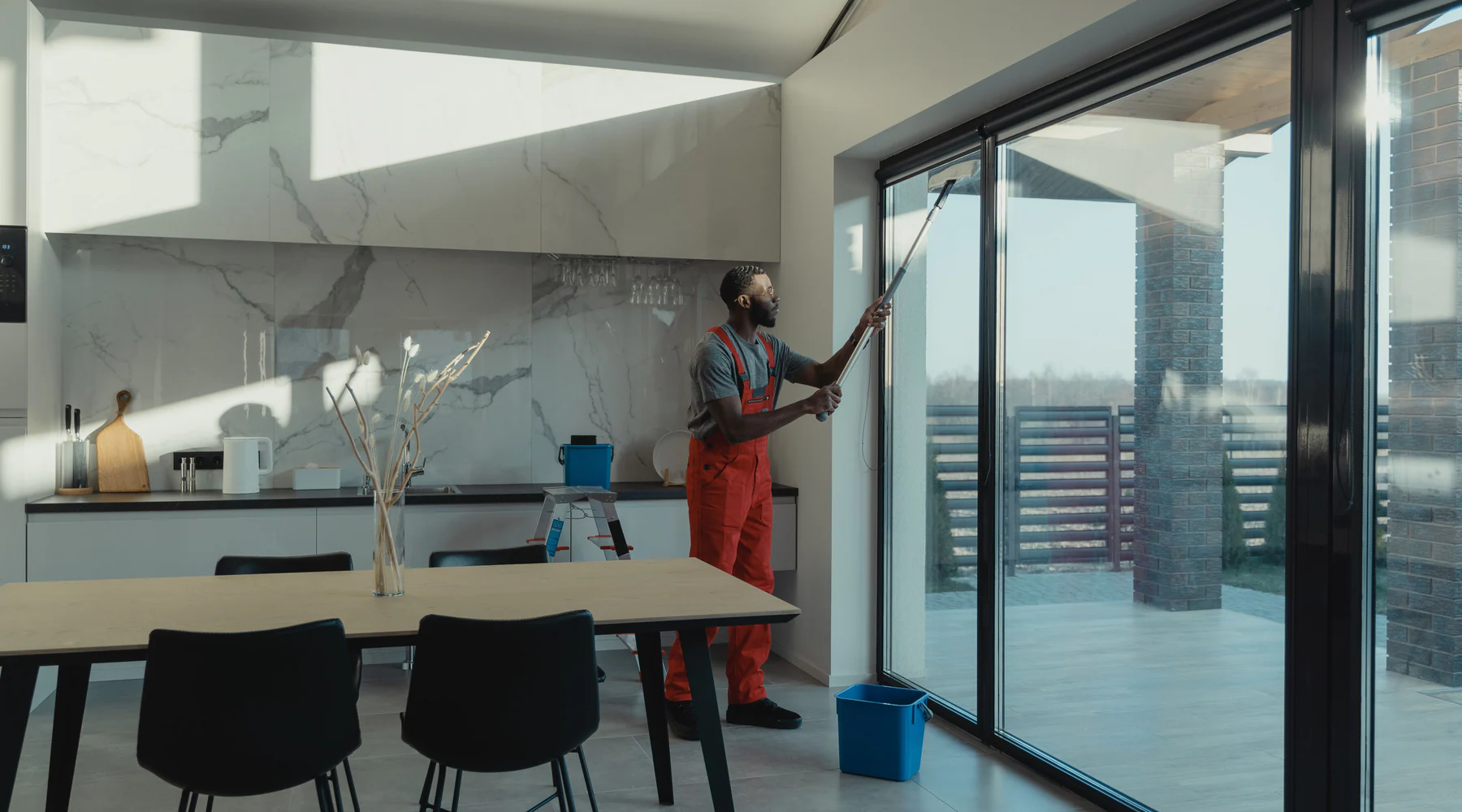
A short service description should answer what your team will do, what needs a separate choice and what the customer should prepare. Take window cleaning. Some customers picture an entire house including outside glass and frames. Others only want the inside of a few windows cleaned during a regular visit. Give each choice a useful unit, explain which surfaces it covers and allow the visitor to change the quantity. If access outside needs a site assessment, make it easy to ask for one.
Apply the same care to options that sound similar. Cleaning the outside of kitchen cabinets and emptying and washing the inside are different jobs. A customer may happily choose the second once they understand the extra work involved. In a mobile form, keep the relevant explanation beside the option and show a short summary after it is selected. Visitors can check what they requested without reopening every category. Your coordinator can see what was agreed without interpreting a free text message written late at night.

Show the arithmetic behind the cleaning estimate
A calculator starts with your pricing rules. Some businesses charge a base visit plus selected tasks. Others estimate from floor area, room types and frequency, then confirm the amount after seeing the property. We can build either approach when the units and limits are clear. Bring one anonymised example that your team priced easily and one that needed discussion. Walking through them together often reveals details that never appear on the published price list but matter to every quote your team sends.
For instance, a kitchen may already be included in the rate for a standard flat. Counting it again as a mandatory extra would produce a total that looks precise and is wrong. A recurring service might have a different rate only after an initial visit. A minimum callout charge might apply once per address even when the customer requests several tasks. Each decision belongs to your business. The estimate can show its components in ordinary language and tell the customer which details still need confirmation before a visit is booked.
Let the office plan a visit it can deliver
A date with an empty square on a calendar does not guarantee an available cleaning team. Consider a crew finishing an office in one part of town and collecting specialist equipment before travelling to the next property. We can design the schedule around working hours, team capacity, travel time and the tasks each team can take. For a first version, you may prefer to collect several acceptable time windows and confirm one personally. The booking screen should explain exactly what the customer has requested and what happens next.
On the staff side, a useful job summary combines the scope, arrival window, estimated duration, equipment and any agreed access arrangements. Staff can record that the customer has changed the number of rooms without losing the original request. Sensitive instructions about keys or alarm systems need an appropriate separate process with access limited to the people doing the visit. An enquiry form for an initial estimate rarely needs that information. Limiting what you collect at the start also makes the form quicker to finish on a phone.
Handle exceptions with a useful question
Certain jobs cannot be quoted fairly from floor area alone. After renovation, the difference between settled dust and a floor covered with adhesive residue is significant. Instead of silently adding a large allowance, ask one specific question about the condition that matters. Offer an optional description or a way to arrange a short assessment. A visitor should be able to continue the enquiry even if they cannot name a surface material or estimate exactly how long a task will take.
The same principle applies when a requested task falls outside the normal service area or needs equipment your team does not carry every day. Explain which part needs review and preserve the choices the visitor already made. Your coordinator then receives a structured request with one clear unresolved point. That is easier to answer than a message that simply says cleaning needed urgently. It also leaves the customer free to compare an ordinary visit with a more specialised service before agreeing to the scope.
Use the demonstration to test a real buying decision
The E-PORTAL cleaning demonstration offers a practical starting point for discussing how a service estimate could work. Try it with a sample property and change one decision at a time. Watch which part of the estimate you look at first. Then imagine explaining the result over the phone to somebody who has never booked a cleaner. If you have to add a long explanation, that is a good candidate for a clearer label, a different unit or a short note beside the relevant choice.
For your own website, test the same journey with two people who do different jobs in your company. Ask the person taking enquiries whether they can confirm the scope and ask the team leader whether they could prepare for the visit from that summary. They may notice different omissions. The first might need to know whether the price is provisional. The second might need to know that there is no lift or that the property will still be furnished. Those details lead to better questions than adding fields simply because similar websites have them.
Decide what success should look like in daily work
Before building extra features, choose a small result you can recognise in practice. It might be fewer calls asking what a standard visit includes, fewer enquiries arriving without the location, or less time spent rewriting the scope for the cleaning crew. Collect a few typical examples with customer details removed. Prepare the service names, actual units and decisions that your business uses. If different offices use different rules, tell us which office the first version should represent.
From there we can prototype the journey, test the arithmetic against those examples and adjust the wording in the languages your customers use. You can start with an estimate that your team confirms and later connect scheduling or other tools when the process is ready. The visitor should leave with a clear idea of the service they selected. Your team should receive enough information to arrange a realistic visit and arrive prepared to do the job that the customer understood they were ordering.